Mitch's Btown Blog

Bikes, Hikes, Music, Mushrooms

Retired boomer, out to walk my dogs, ride my bike, and hike the forest paths around Monroe County Indiana. Recently found ADHD runs in my family, and apparently gallops in me…

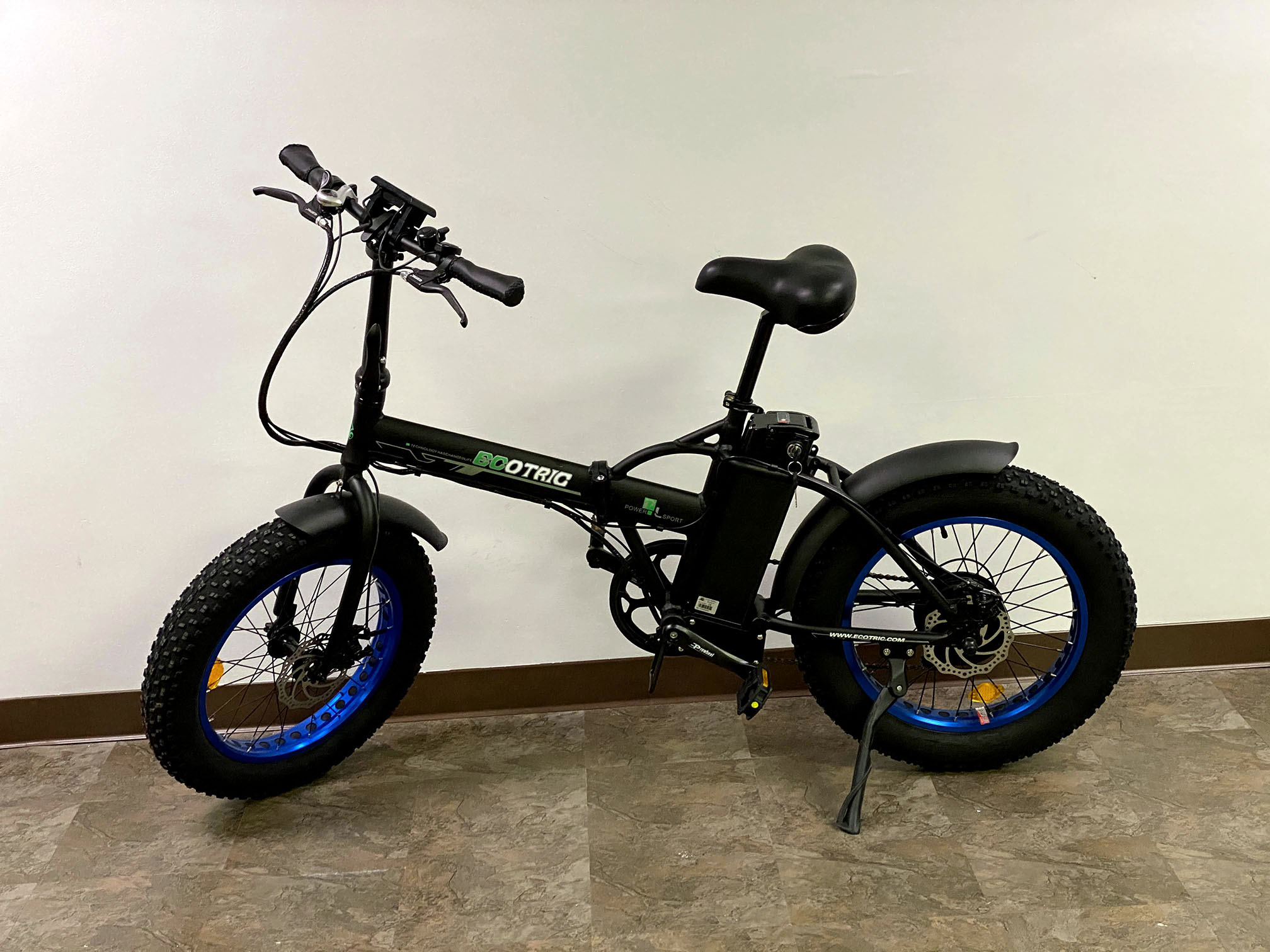
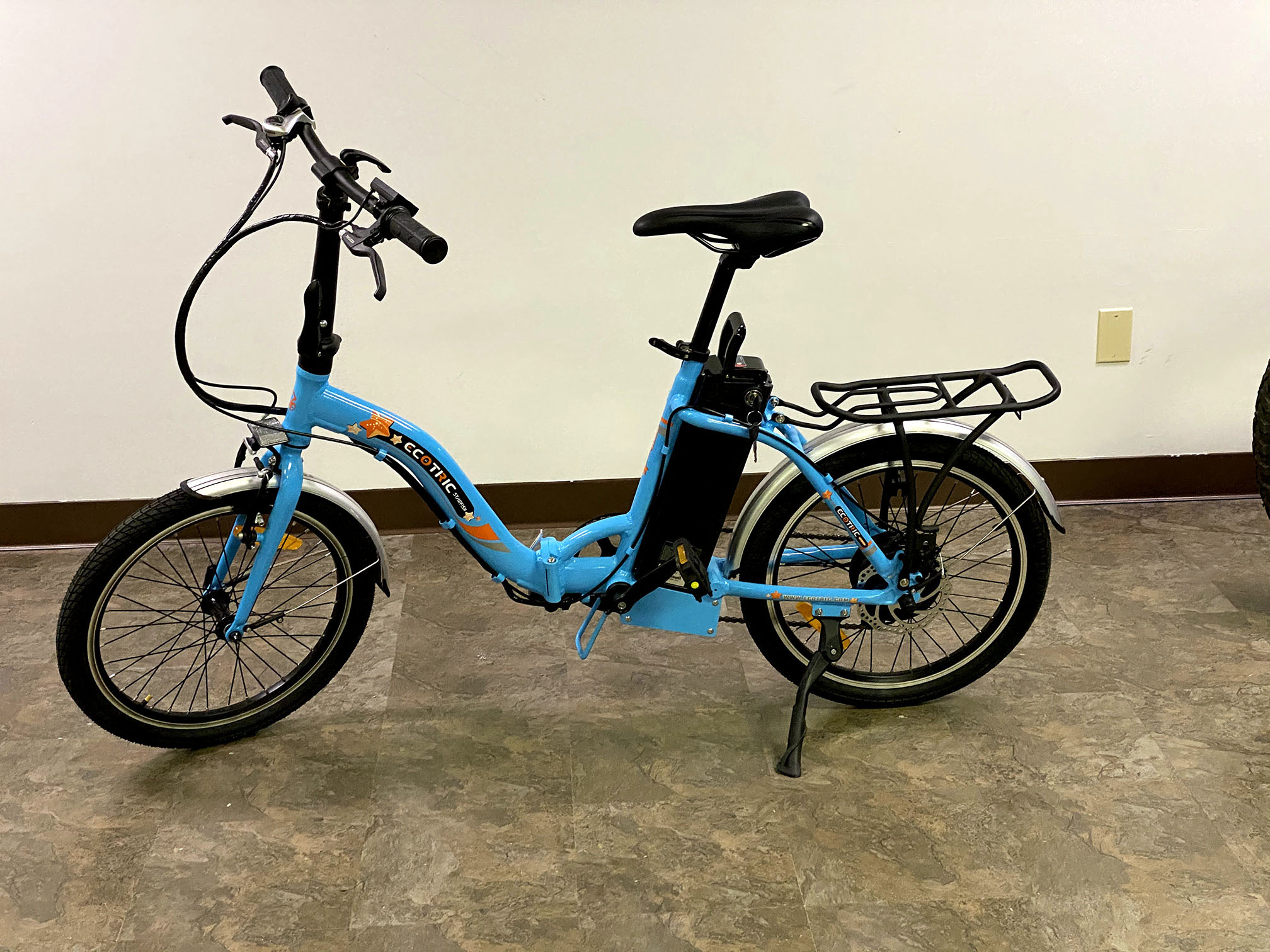
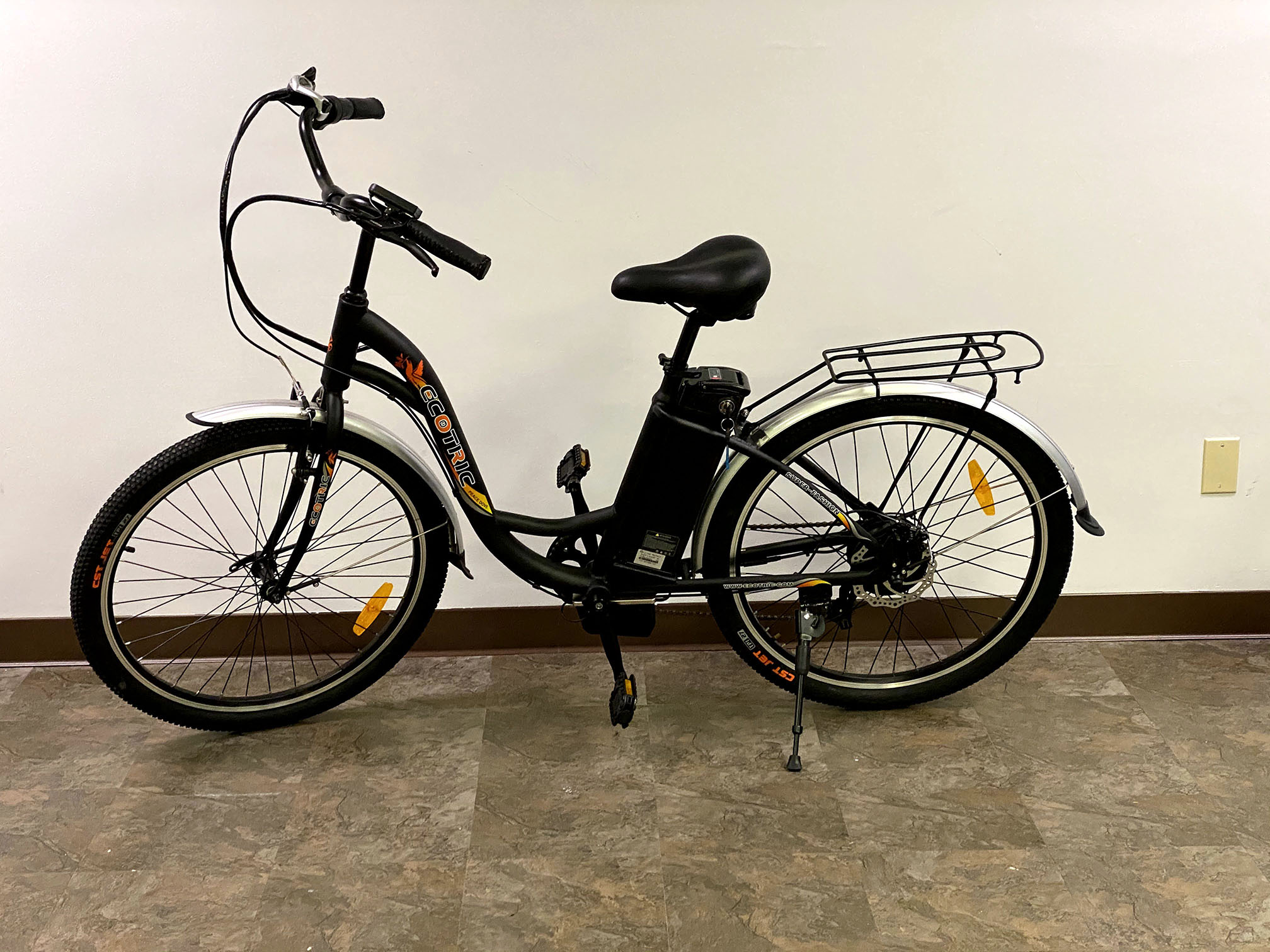
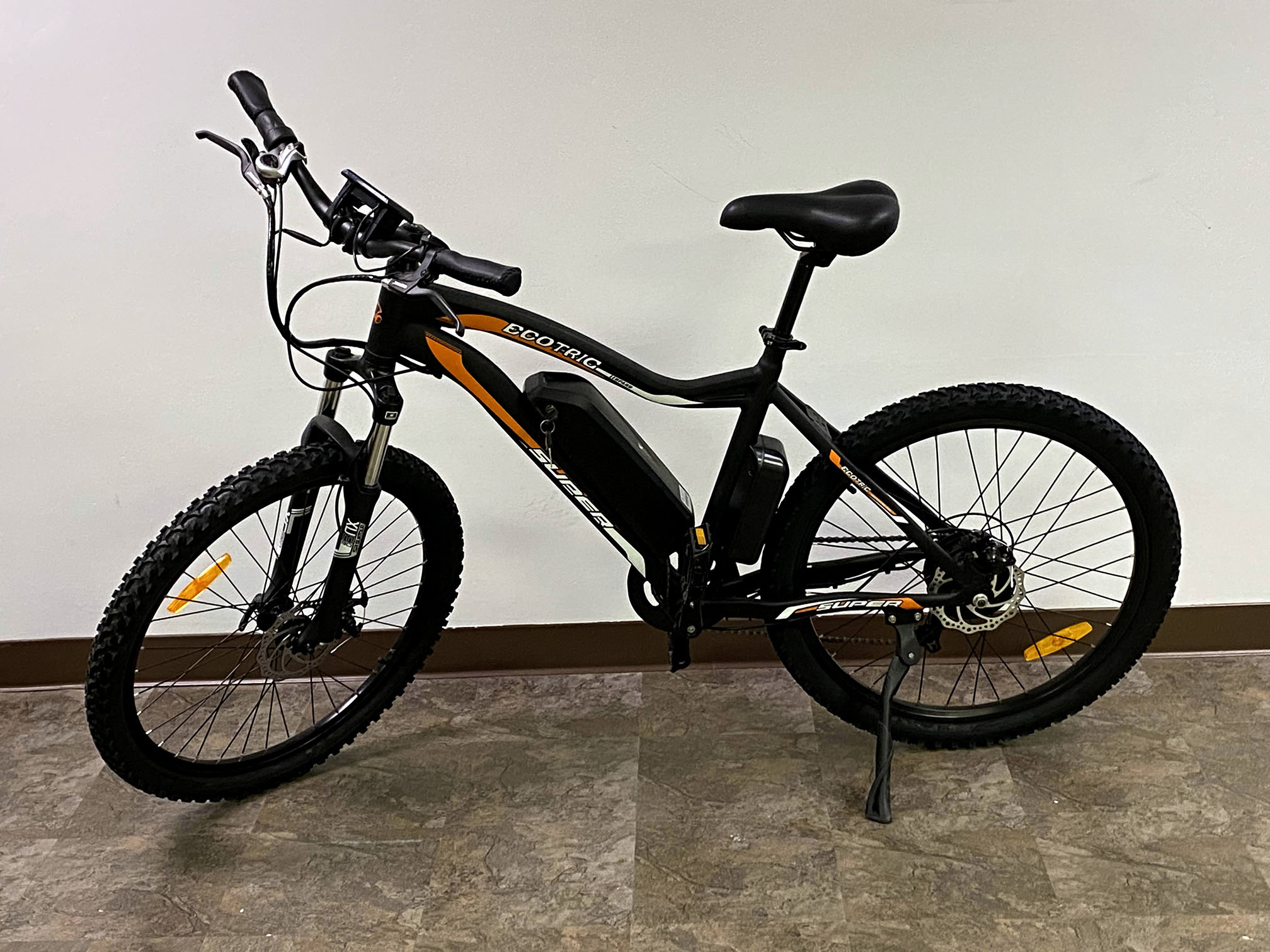
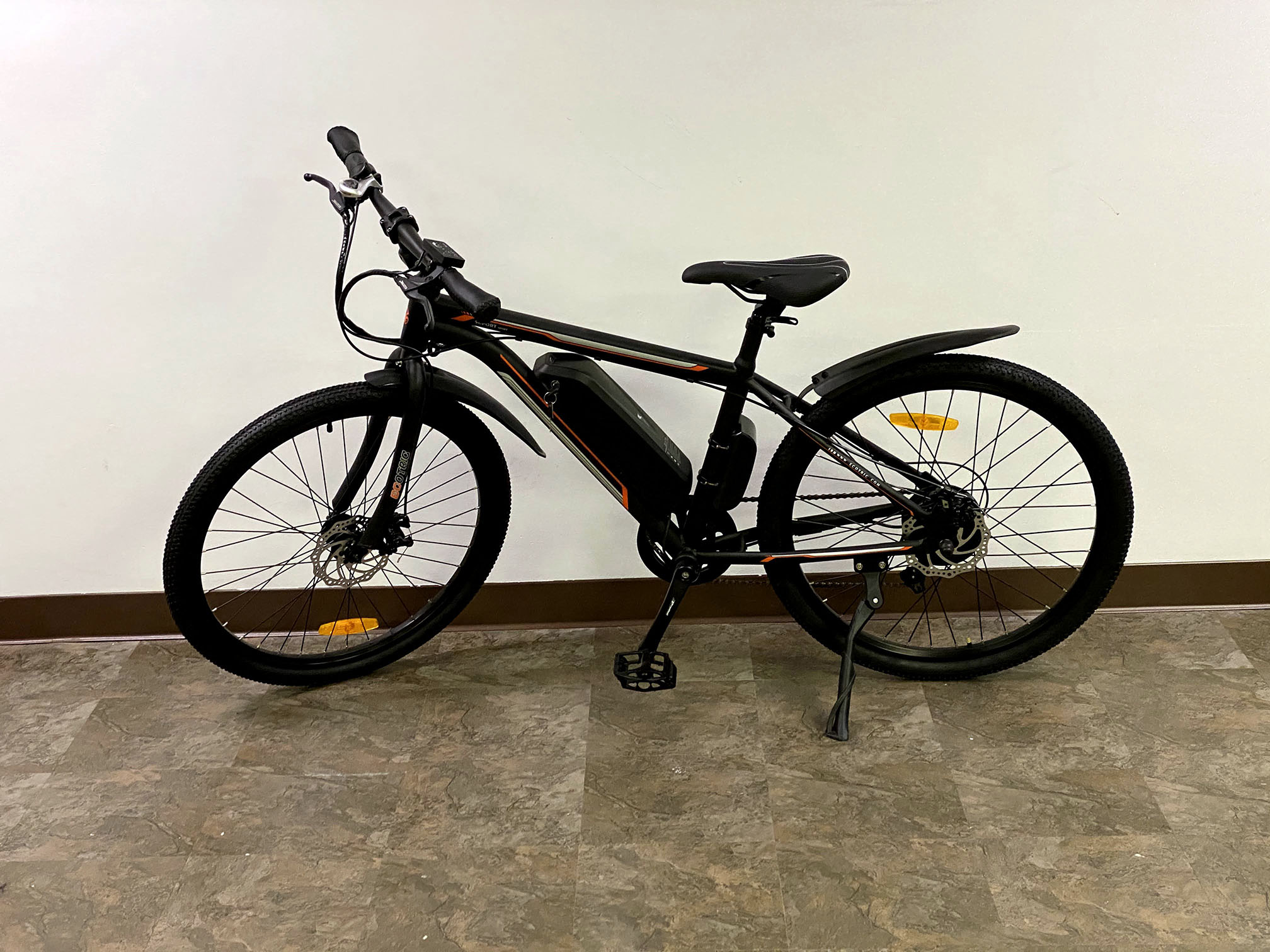
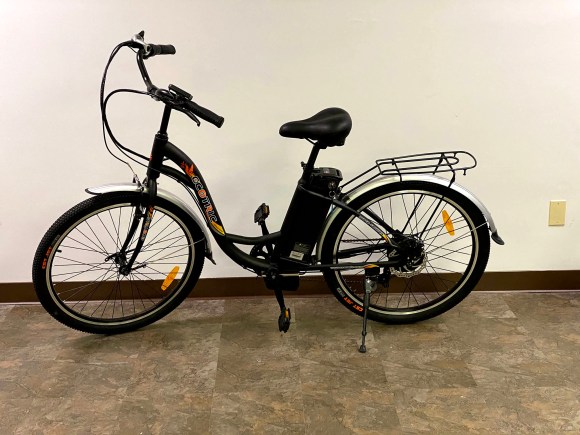
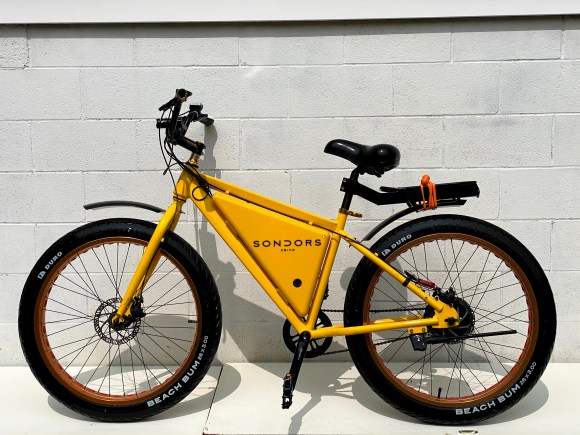
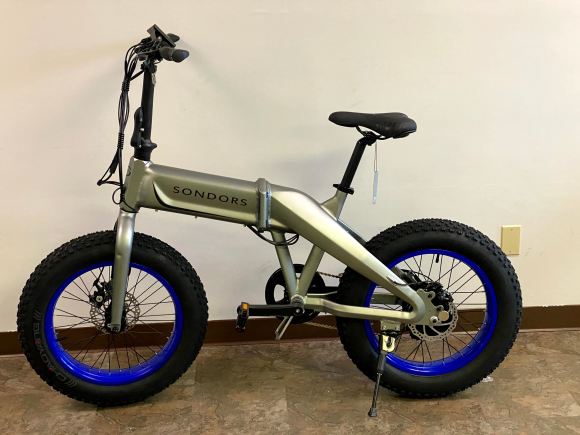
  • We are proud to offer SONDORS electric bikes! We are the only dealer/repair shop in our area, and currently have 3 models in stock, the SONDORS X, the Fold X and the Smart Step. All 3 are extremely sturdy, elegant and well built. With plenty of power on the SONDORS X and Fold X (48V/500W motors), they will conquer any hill in southern Indiana, while the fat tires will smooth out any bumps or pot holes with ease. The Smart Step is built to mount easily, and with 36 V/350W motor, it is sized perfectly for city use, or cruising our county roads in style. The SONDORS line is a bit more expensive that our Ecotrics, but we feel they are well worth the extra cash ($200-300).

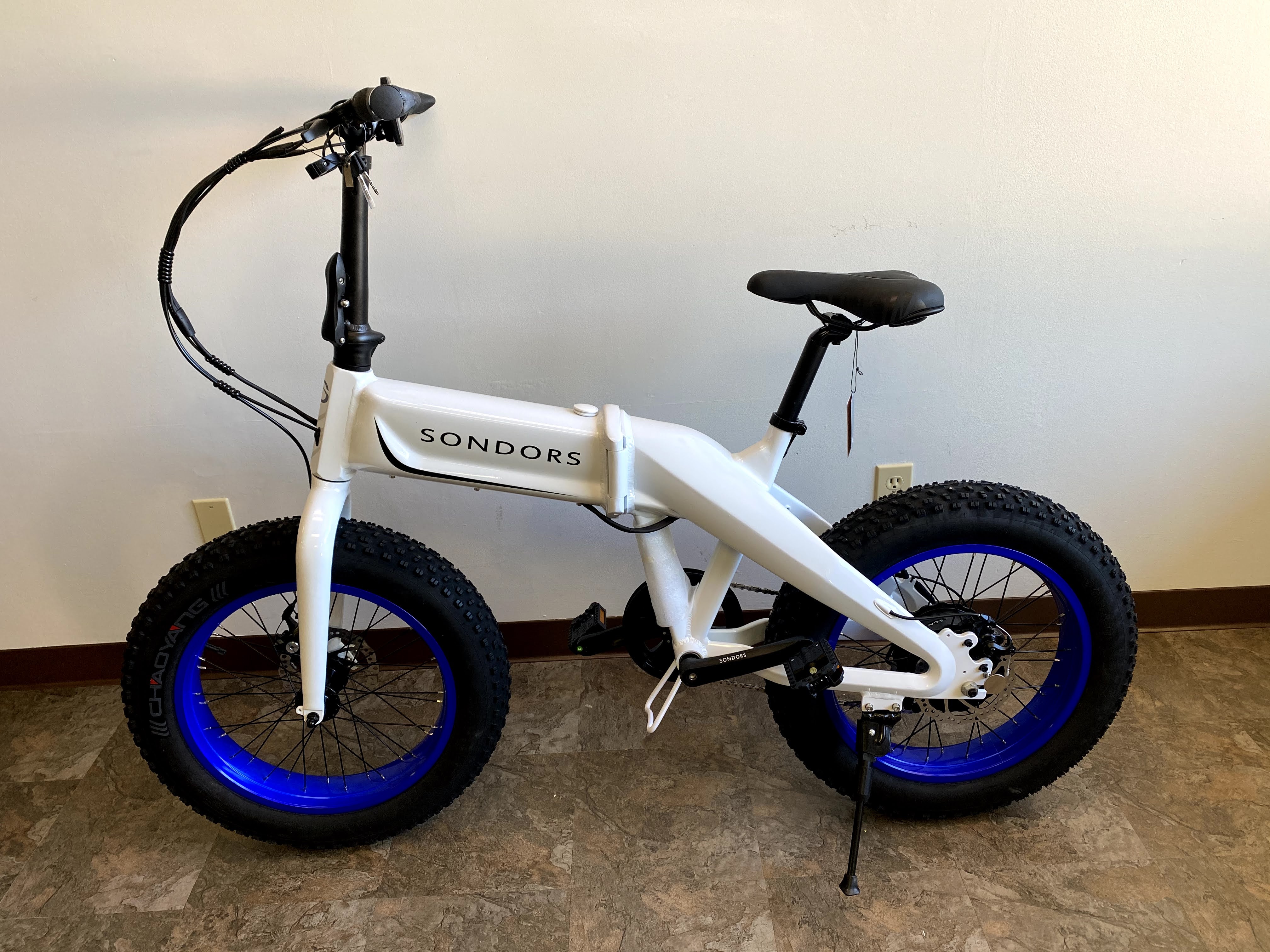
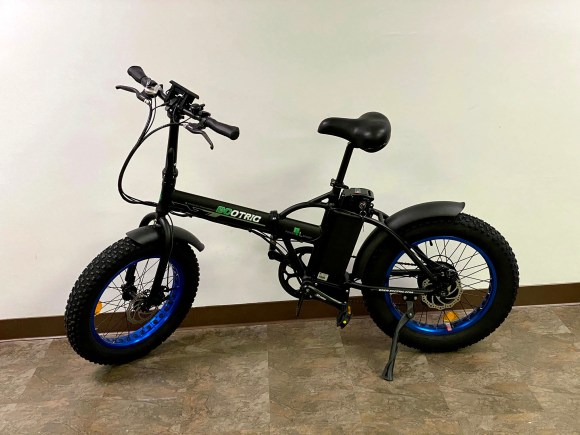
    Sondors Fold X

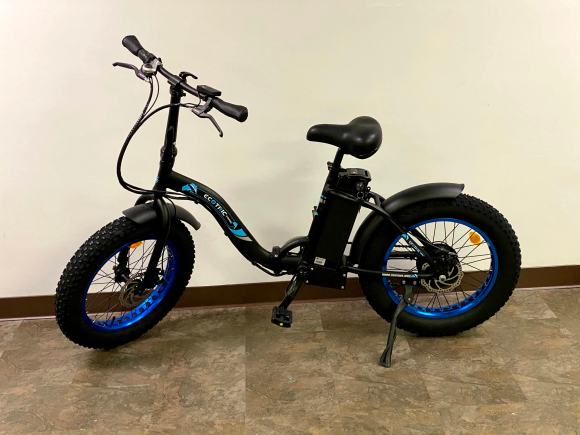
    The Sondors Fold X is a sleek little machine to look at, but feels like a beast once you are on it. Like all Sonodors models, it will handle up to 300 lbs, and has a ton of power to get you going, quick, even up hill. The 20″ fat tires grip the road, and the smaller wheels mean you have more torque than standard 26″ wheels. Try one out, they are a true values at $1300 at Zephyr Bikes.

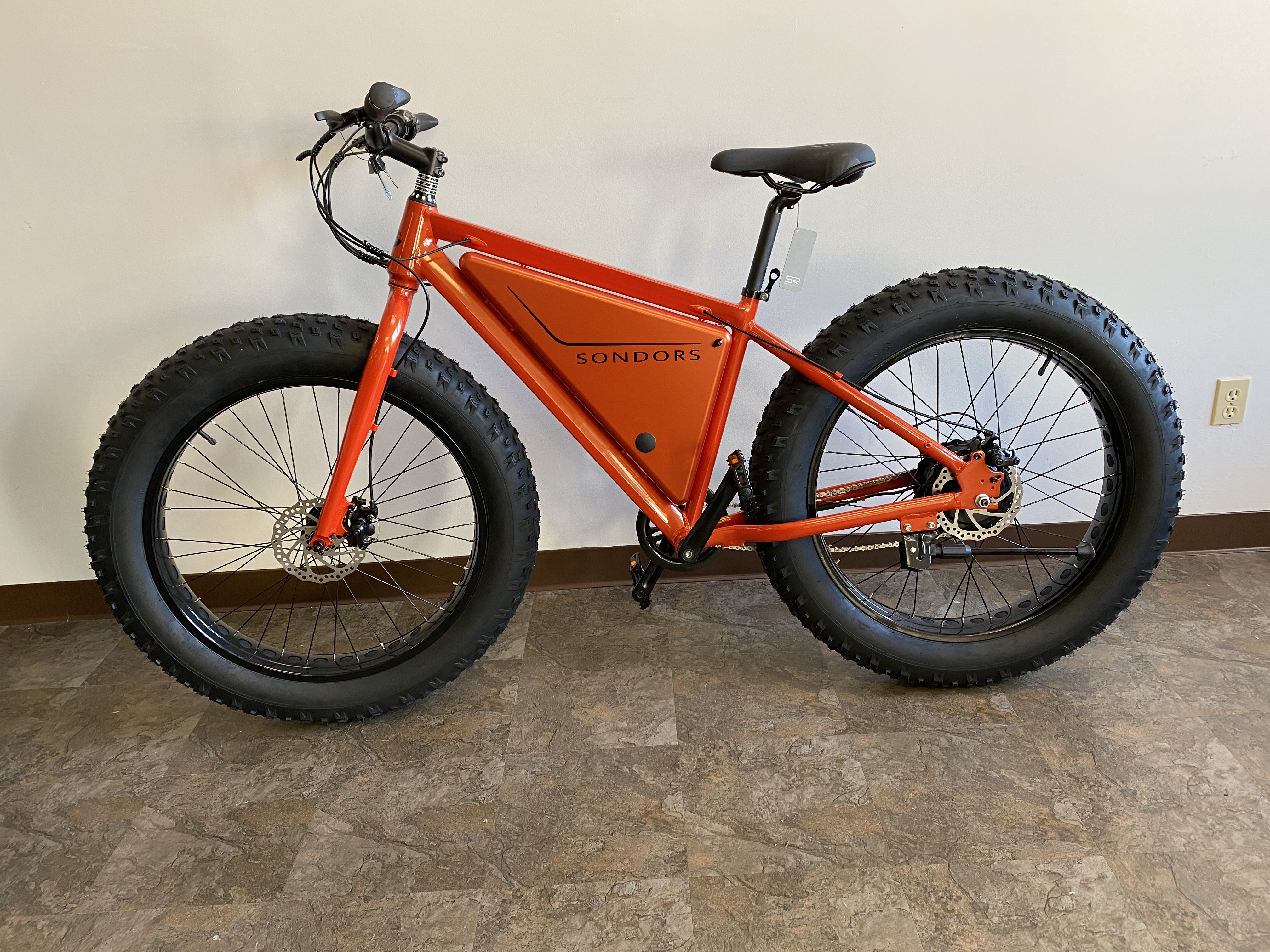
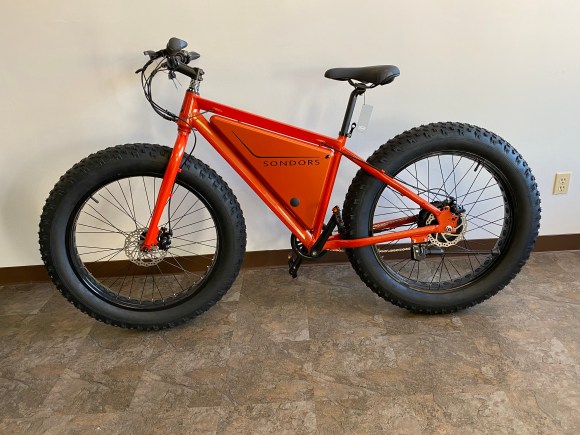
    Sondors X Mountain Fat Tire
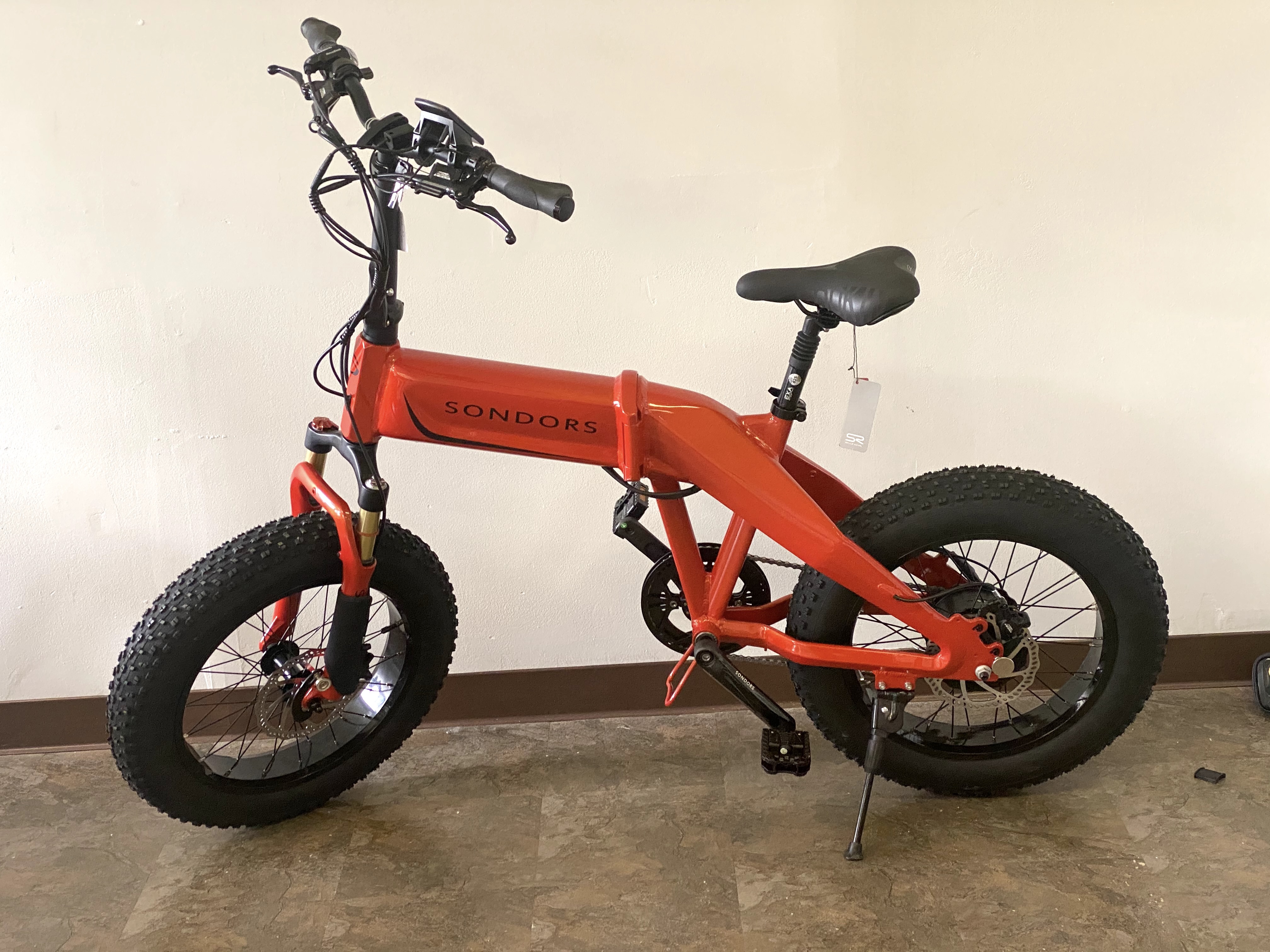
    Sondors X Mountain Bike-Fat Tire

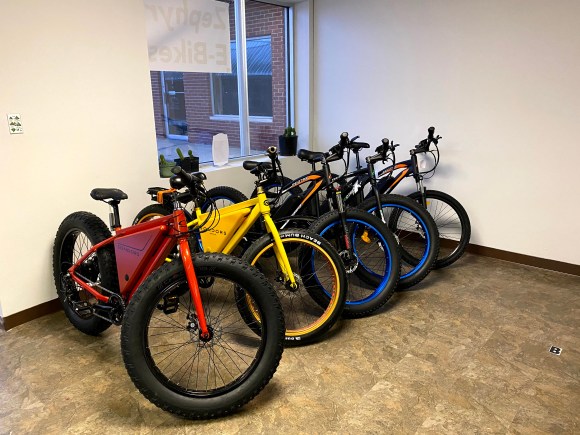
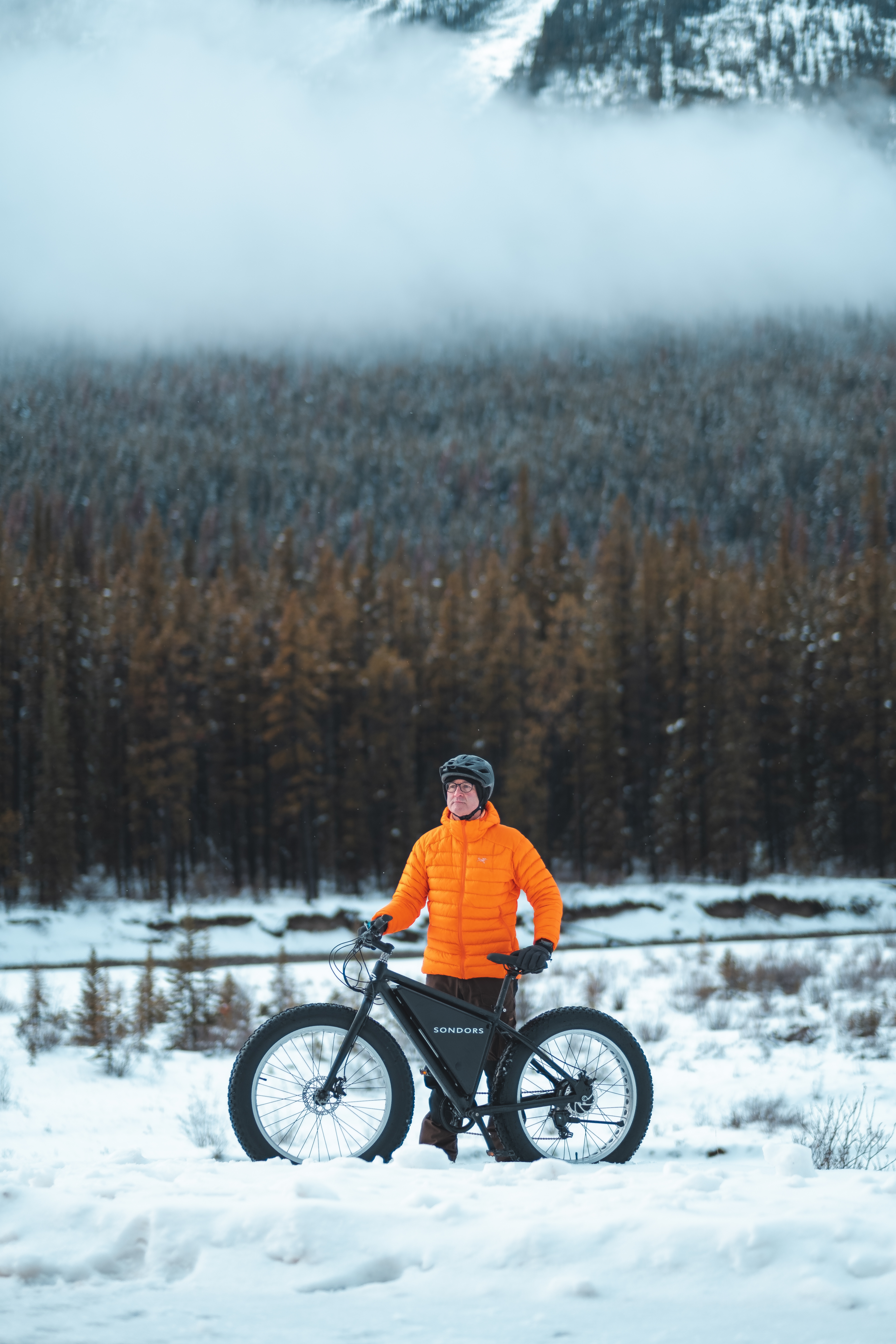
    This is the SONDORS X, a fat tire mountain bike, which is more than enough the handle the gravel roads, off-road trails, and steep hills in our area (look out McGowen Rd!). This is a heavy duty hard tail with no front suspension, which is no problem due to the fat tire’s ability to smooth out the bumps. The controller and battery are well protected from water and mud in the SONDORS proprietary case, making it great in all weather. The SONDORS X is $1300 at Zephyr E-Bikes.

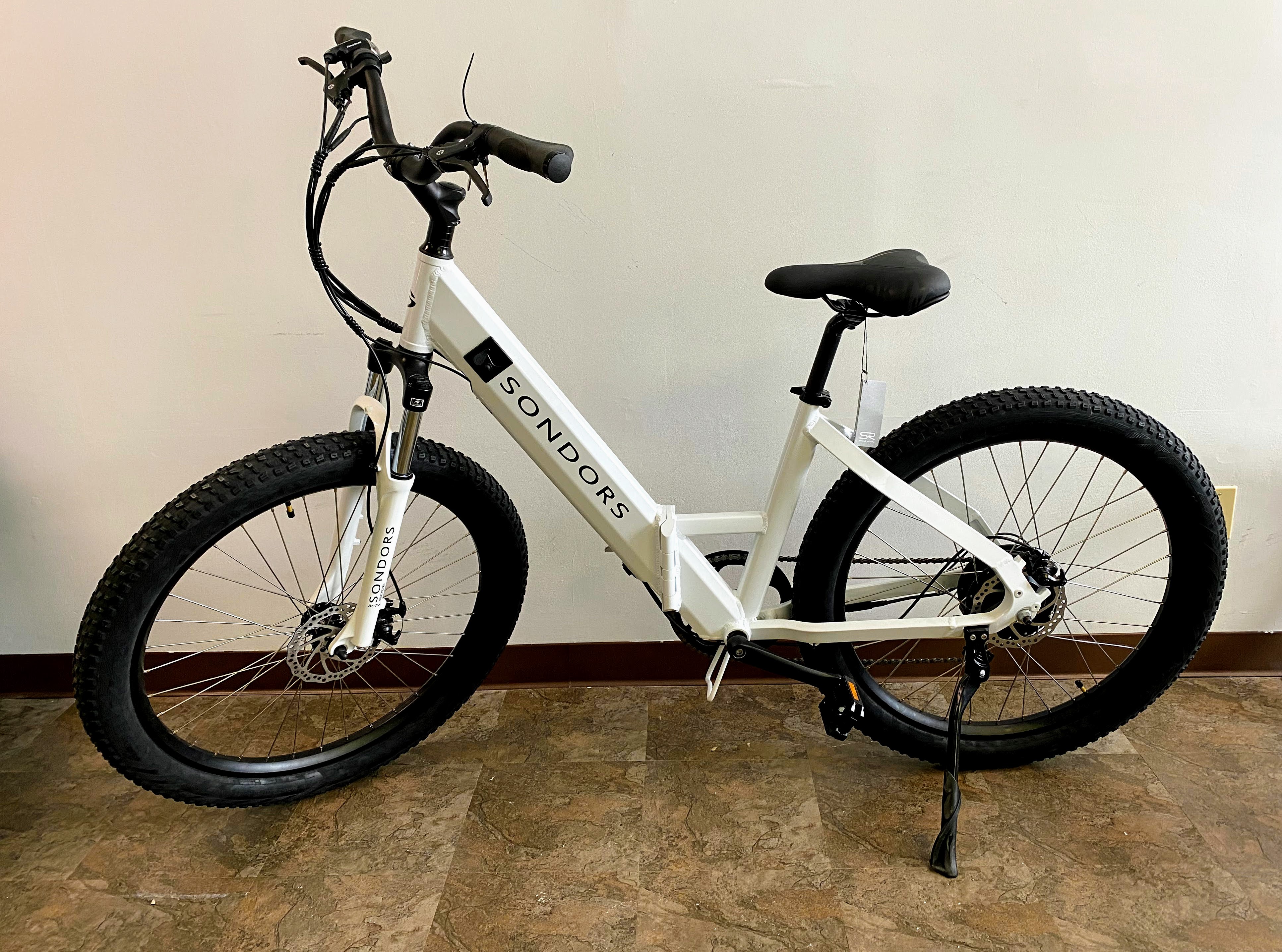
    SONDORS Smart Step

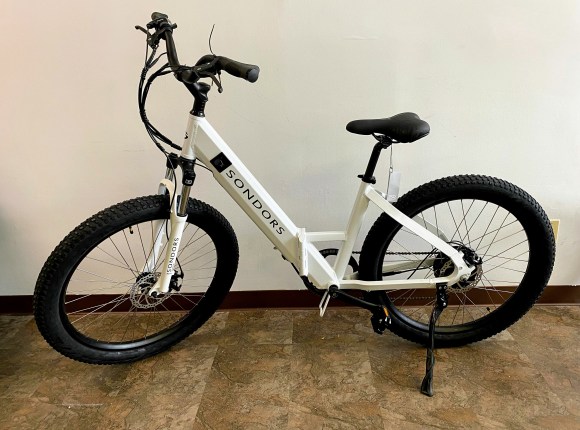
    The SONDORS Smart Step is the right choice for those of us who prefer the ease of mounting that a low step bike affords. It is a full sized bike (27.5″ wheels) that will hold large humans up to 300 lbs, yet with its low step design, is easy to manage for just about anyone. It has a 36V/350Watt motor good for 25-40 miles before recharging. Use it for cruising around town on errands, or with 3″ tires and front suspension, hit the gravel/dirt roads and hills in our area. $1300

  • I recorded this song just as the Inauguration (2021) began. As Amtrack Joe seems to be the first president with a sense of what good transportation looks and feels like, I was feeling paticularly hopeful for the future. I am hoping our e-bike initiative will help bring ever more folks to the biking lifestyle, and foster postive change in our transporation system.

    First recorded (and composed?) in 2005 by Robert Crumb and His Cheap Suit Serenaders on their “Singing in the Bathtub” album, it apparently made its way to England, where this cute video has emerged. Both versions are superior to mine, but I just had to give it a try!

  • Zephyr-Ebikes Shop

    Williamsburg Center, Suite 13
    121 S. Pete Ellis Drive
    Bloomington Indiana
    812-219-1324


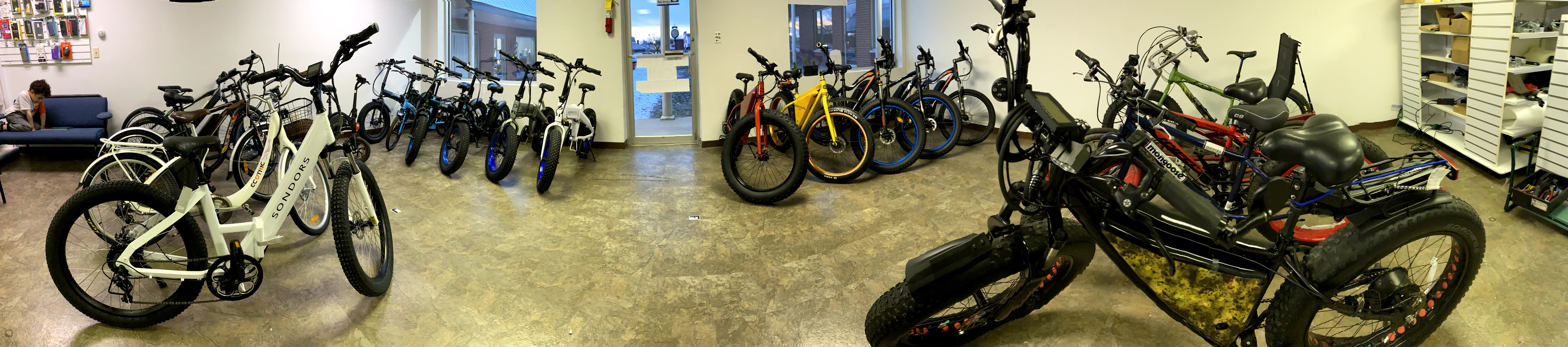
    We (Mitch Rice & my son-in-law Emmanuel Wefunya) run an e-bike shop in Bloomington, Indiana. We are located on the eastside of Bloomington IN, near College Mall. We sell, assemble, service, and upgrade all models and styles of e-bikes. Sondors and Ecotric are the new e-bikes we sell, brands which we see as good values in the $800-$1600 price range. If you purchase online from another brand, we can assemble and tune it for you,  or meet with you to make sure you order the best bike for your circumstance.

    • Folding E-bikes
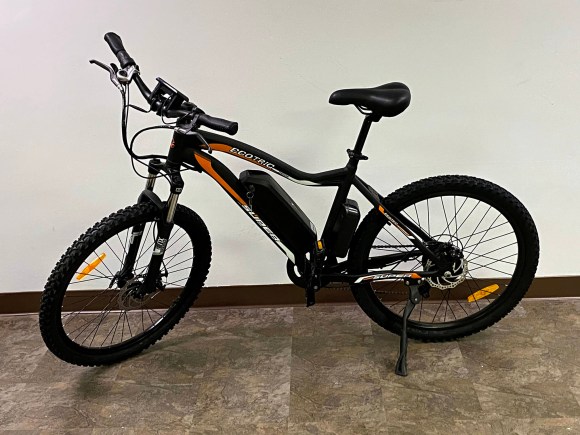
    • Fat Tire Mountain E-Bikes
    • SONDORS Smart Step
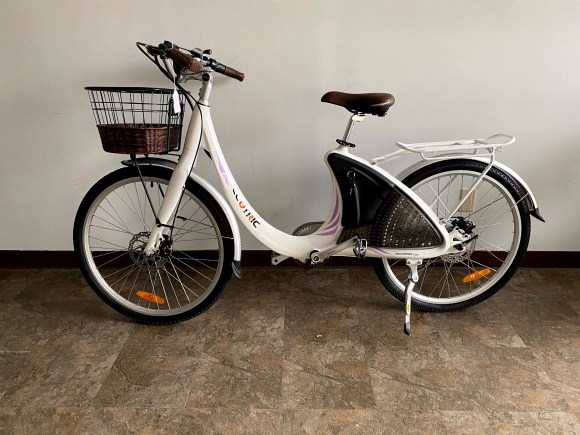
    • Ecotric Lark
    • Sondors X Mountain Fat Tire
    • Zephyr E-Bikes
    • Sondors Fold X
    • SONDORS Fold X

    All of our e-bikes feature 3-5 levels of power assist, which means you can adjust just how much assistance you use at anyone time, from none, to up to 3-4 times your input energy. So an average commuter cylist might produce about 150 watts at 10 mph. (Bike athletes can produce 200-300 watts average over 4 hours, and even more during sprints) So it is like having a couple of extra rider your bike, but without the extra weight and wind resistance. Most models have a throttle as well, which is especially useful when starting up and moving throught city intersections. It overcomes your initial inertia, allowing you to cruise easily through the toughest intersections.

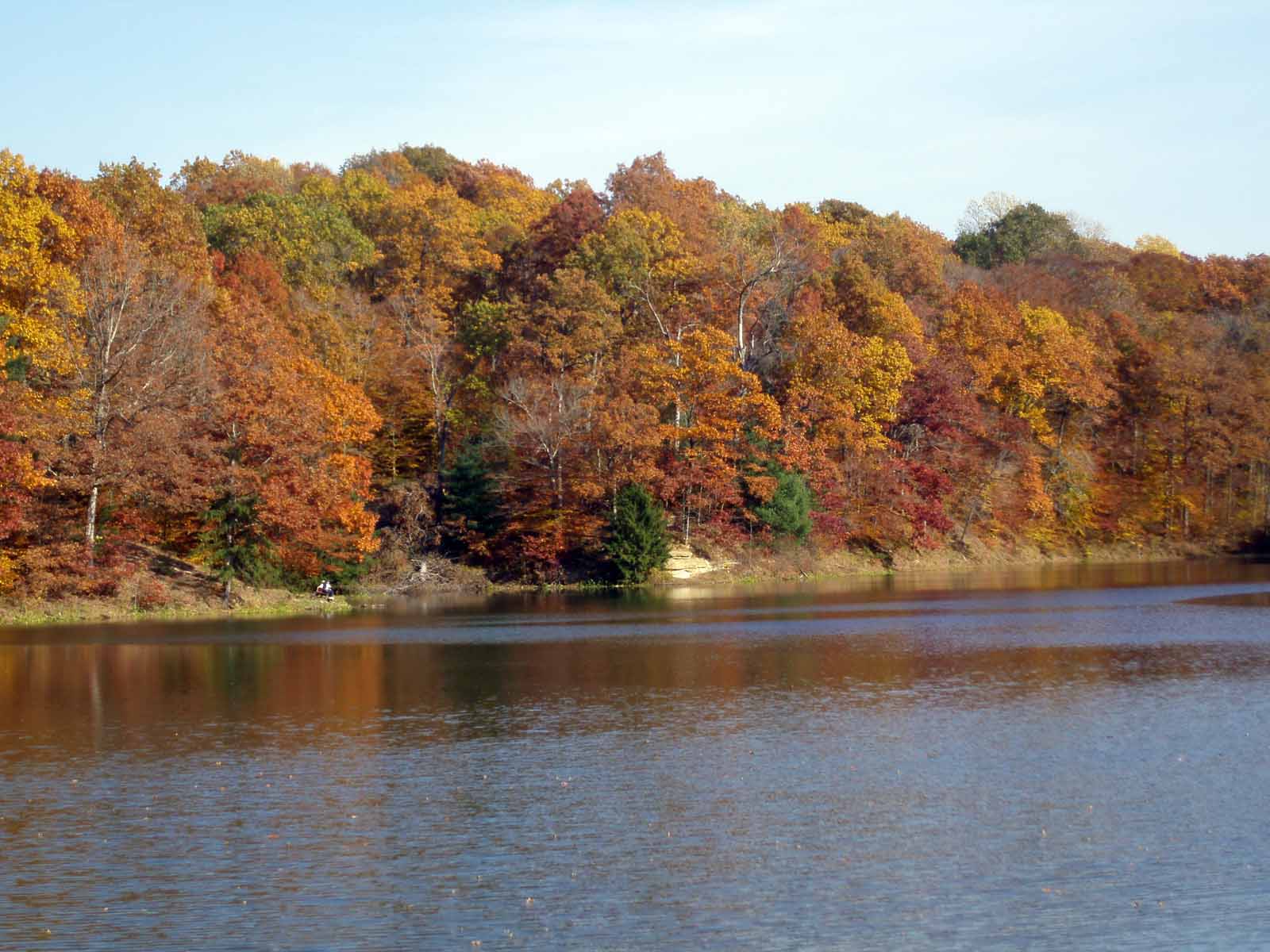
    Indiana Fall
    Indiana, seen from a bike…

    We are sure that e-bikes have a great potential for improving our national transportation system, as well as for personal growth, health and well-being. E-bikes make commuting comfortable and accessible for a wide range of people with the added benfit that e-bikes are fun, easy to ride, and eco-friendly. E-bikes chill the hill, no sweat, really, and distance is no problem while an averaging 15/mph in the city. No need for fancy riding clothes, and you will arrive at your destination calm,  cool, and ready to go, while feeling mentally/spiritually refreshed by your ride to work.

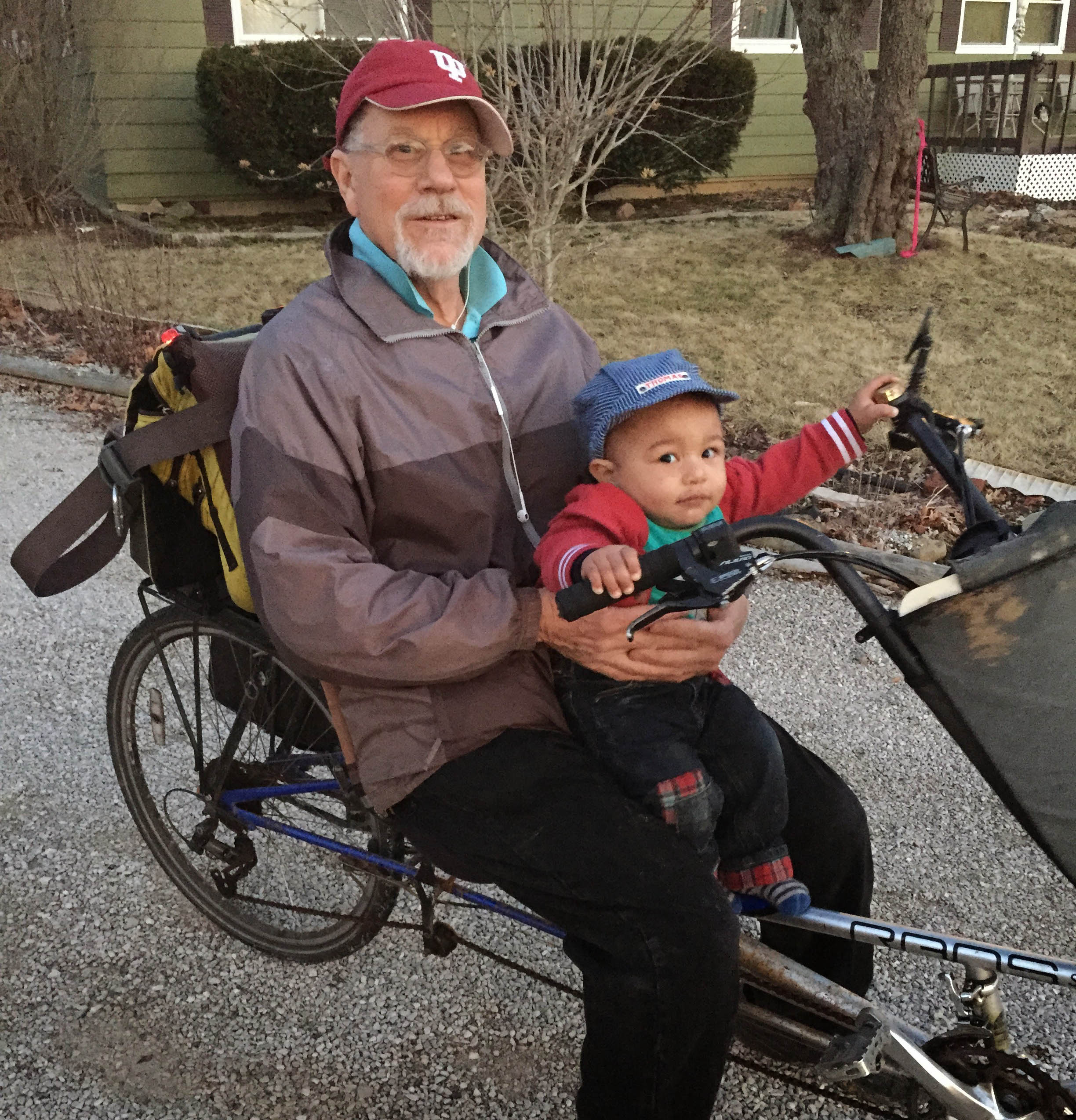
    Recreationally, e-bikes can really extend your range, and with 3-5 levels of assist, you don’t need to worry about our abundent hills; in fact you can look forward to them. All models have a power indicator, allowing you to guage the milage left, and for the really long rides (over 50-60 mi), you could carry a second battery. We recently converted Mitch’s classic Rans recumbent, which was used for over a decade to roam all over Monroe, Brown, and Lawrence counties. Here’s to the many miles ahead!

    Happy, safe riding to all,
    Mitch and Emmanuel

    mitch-dex-bent
  • Back country riding-SONDORS
    Back country riding-SONDORS X

    At first, I understood fat tire bikes a specialized category; they are obviously great for beach, snow, and mountain bike adventuring, but for day to day, not so much…till I tried out a fat tire e-bike. I was used to the 2″ tires of my RadPower Cargo bike, but 3-4″ tires really make the potholes disappear, and you feel like you are riding “high, wide, and handsome.” The mountain bike style was the original, first hand-made in Alaska to work in the snowy day to day weather there. They traveled to California as a beach bike (great on sand, gravel, dirt). These beasts then aquired gearing to become mountain bikes, and with electric assist motors, they could go anywhere in the Rockies. Thie addition of electric power has made them ridable by non-athletes where ever and whenever; the bulk and weight just disappear as a factor, and you are then riding the SUV of bicycles, big, bold, and powerful. Cars notice, you can keep up in traffic, and potholes and curbs are no longer a threat. And of course, they rock the back country, gravel, dirt or mud, they plow right through.

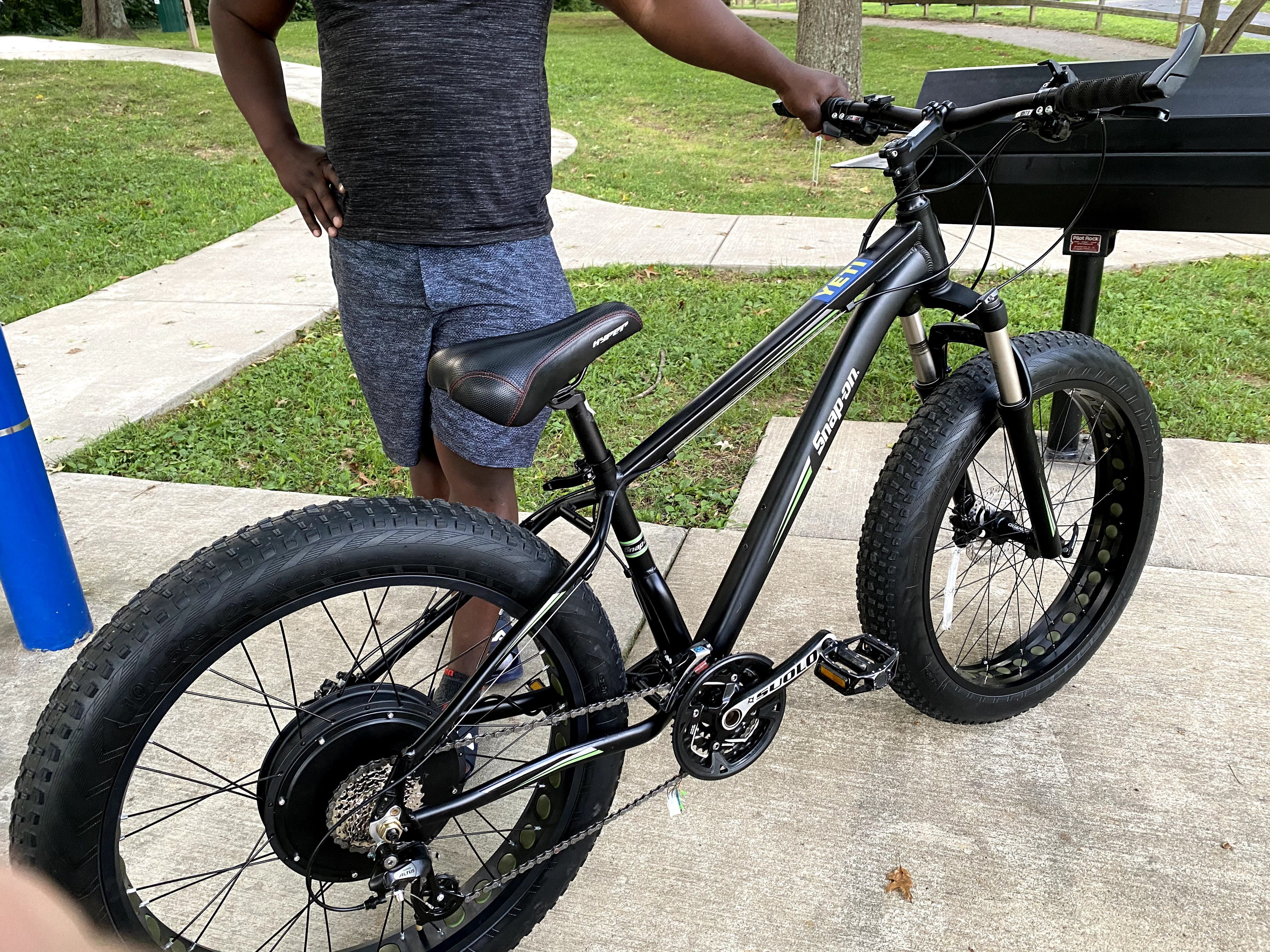
    In this picture, Emmanuel is holding a mountain bike that we are modding, the battery and controller are yet to be added. This beast will climb any hill with its 1000W motor and 4″ fat tires.

  • There have been a number of letters to the editor lately concerning bikes on the B-Line, and truth to tell, it is a difficult set of laws that must be perused to fully understand the proper procedures.

    This where most of the confusion exists:

    TRUE or FALSE
    Bikes must stop/yield at the B-Line crossings.

    TRUE! There are Stop signs as each crossing, and text that declares “Cross Traffic Does Not Stop”. These signs are for bikers only, but some people do not see them, or ignore them. Many bikers seem to think they are pedestrians, but they are not. In fact they are vehicles according to state law (IC 9-21-11-2) On the B-Line confusion seems to be that many people believe that motor vehicles should stop for both pedestrians and bikes when on the trail, but this is just not case in Indiana. If a pedestrian is on a curb at an intersection, then “…a person who drives a vehicle shall yield the right­ of­ way, slowing down or stopping if necessary to yield, to a pedestrian crossing the roadway within a crosswalk when the pedestrian is upon the half of the roadway upon which the vehicle is traveling or when the pedestrian is approaching closely from the opposite half of the roadway. (IC 9-­2-1­8-­36)”

    This sentence contains a lot of info. It may seem a bit strange, but motor vehicle operators are required to slow down or stop only once a person has stepped into a crosswalk on the side of the street on which the car is traveling. Once you closely approach the other half of the street (this is not an exact distance in this code), then cars are required to yield or stop. This not true for bikers, unless they dismount and walk their bikes across the street, as then they are pedestrians.

    On the B-Line, I most often see cars stopping for pedestrians and bikers who are waiting to cross. This is great, Hoosier Hospitality at its best! However, it is not required by law unless the pedestrian has entered the crosswalk, so there is no reason to become annoyed or angry that people are not stopping for you. Better to take a deep breath and enjoy the beauty of life in the open air, and pity those stuck in their iron cages.

    Bikers are not pedestrians, they are considered non-motorized vehicles, and should stop at the B-line crossings, and wait for traffic to clear. Even if you poke your wheel into the street, hoping the cars will stop, you could be cited for obstructing traffic, and if you were hit, you would be at fault.

    Even pedestrians must be careful about stepping out into the street: “A pedestrian may not suddenly leave a curb or other place of safety and walk or run into the path of a vehicle that is so close as to constitute an immediate hazard. (IC 9-21-17-5)

    So pedestrians should not jump in front of moving motor vehicles! This seems rather self evident, but this codifies the concept. If you do this, the police can (and have in the past), follow the ambulance to the hospital, and issue you a citation.

    All this being true, there is still this requirement for vehicle drivers:
    http://www.in.gov/legislative/ic/code/title9/ar21/ch8.html

    Sec. 37. Notwithstanding other provisions of this article or a local ordinance, a person who drives a vehicle shall do the following:

    1. Exercise due care to avoid colliding with a pedestrian or a person propelling a human powered vehicle, giving an audible signal when necessary.
    2. Exercise proper caution upon observing a child or an obviously confused, incapacitated, or intoxicated person.

    Traffic control signals not in operation

    So according to state law, cars do not have to stop for pedestrians unless they are in the crosswalk. This is not the case in all states, but it is here in Indiana, as well as Vermont and Florida. So it is polite to stop your car for pedestrians at the B-Line crossings, but it is not mandatory, it is not law.

    IC 9-21-11-2
    Roadways; rights and duties (for bicyclists)
    Sec. 2. A person riding a bicycle or operating a Class B motor driven cycle upon a roadway has all the rights and duties under this article that are applicable to a person who drives a vehicle…

    On the B-Line, there are stop signs not on the roadway, but on the B-Line itself, and these are meant not for the pedestrians, but rather for the bikers. The signs on the road read “Cars must yield to pedestrians in the crosswalk”, the functional important parts being “pedestrians” “yield”, and “in the crosswalk”, (not on the sidewalk).

    To say the least, this is not clear to most users, but it is the case. If you were to ride out into the intersection without first stopping (blow through the crossing) and get hit, you would be cited for the infraction, not the motorist, even if they had time to stop. Unfortunately that is the law, and the tradition; police often see themselves as the guardians of vehicular traffic, and like many motorists, can see pedestrians and bikers as impediments to motorized traffic, rather than seeing them as traffic itself. Of course we are all traffic, people trying to get from one place to another, but the culture is currently weighted to favor motorists. We are trying to change this balance, and in fact Bloomington has one of the highest percentage of non-motorized commuters in the US, nearly 5%.

    Be careful out there!

    https://bloomington.in.gov/bike
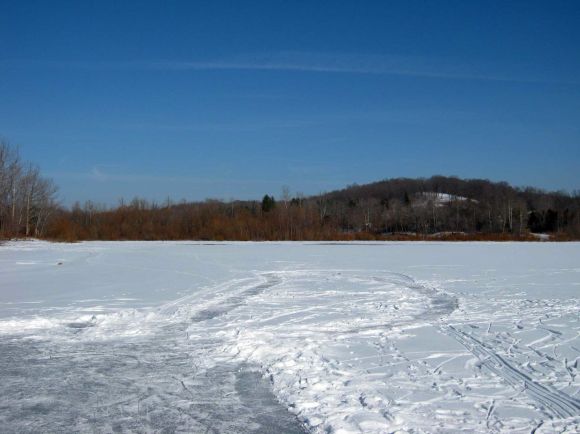
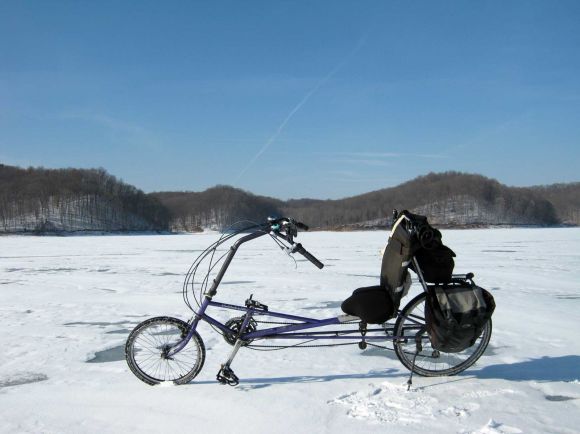
  • This year was the best year in a decade for ice biking (and skating) on Lake Griffy.

    The ice was 4 inches thick, and completely clear and slick. There was a deep freeze, and no snow, sleet, or rain had marred the surface, so it was perfectly smooth. So how does a bike work on smooth clear ice? Perfectly well, thank-you! There are several tricks to biking, and staying on your bike, on ice. First, do not push hard on the pedals! That will cause slipping for sure. Start slow, and keep adding just a small amount of power to your spin till you are going at a reasonable speed, which on ice is usually less than 10 mph. Second, don’t turn quickly, your front tire will slip, and down you will go. Third, be very careful when braking, in fact the best policy is to leave them alone; don’t put yourself in a situation where they are needed, and you will be fine.
    About tires: Nothing special is needed, though I assume having studs would give you the ability to move faster as you would have better traction. But this is has not been necessary for me. A couple years ago I had slicks on front and back, and they worked great! More contact with the ice gave me better traction. This is not true for snow, where having tread really helps gain traction. Snow riding is a bit harder than ice riding, but just as much fun, there is no doubt.

    After a week or so, a light snow covered the surface of the ice. I could not tell if it was more or less slippery than clear ice, I think it was a combination of factors each way so that it was a draw, though it was just a little harder to pedal.

    The snow it did not slow down the intrepid skaters Michael and Jenny, who explored the deep end of the lake with me.

  • car tracks on bike lane800
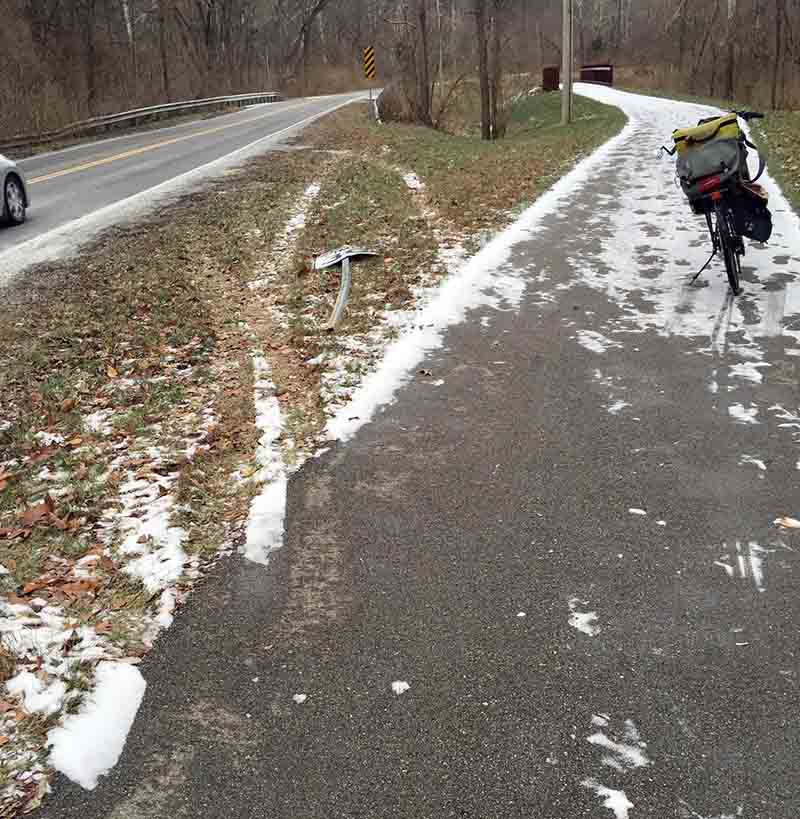
    I know that separated bike paths are a great idea, it certainly makes biking feel safer, in most cases. But as I was riding to Griffy Lake the other day, I noticed that car drivers can and do make some mistakes that threaten even well separated bike paths. This picture was taken on Old 37, just a hundred yards from the intersection of Cascades and Walnut not far from Griffy Dam. The sign says 30 MPH, but the motorist who ran into it, and onto the bike path must have been going much faster.
  • Dec. 2010

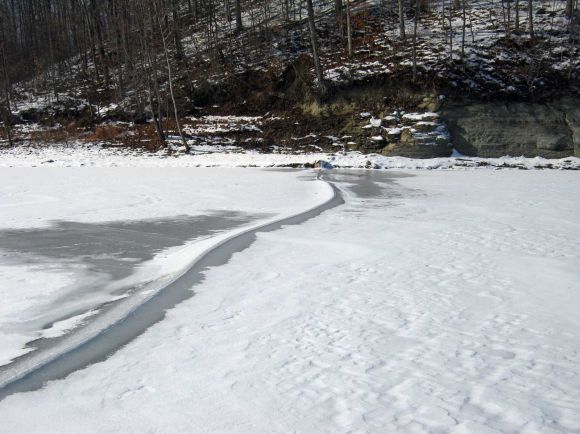
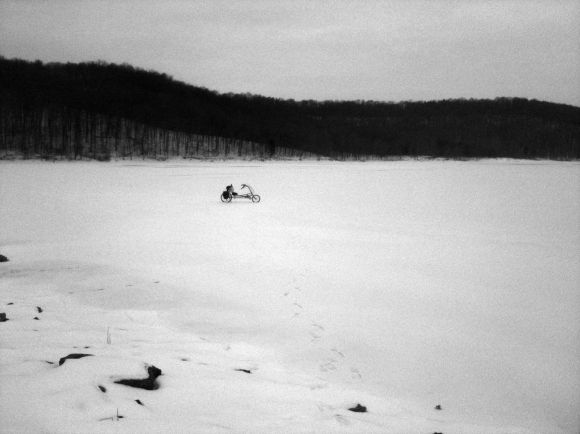
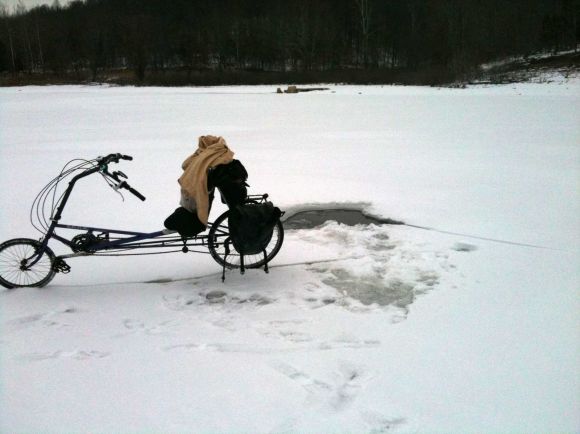
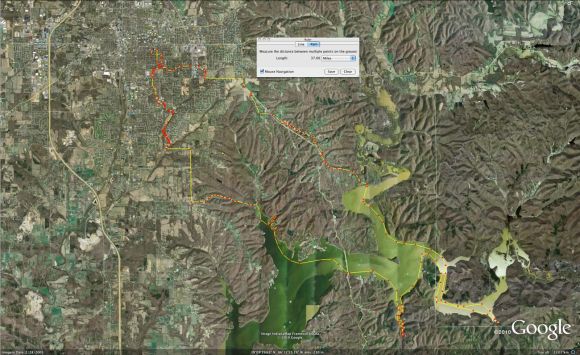
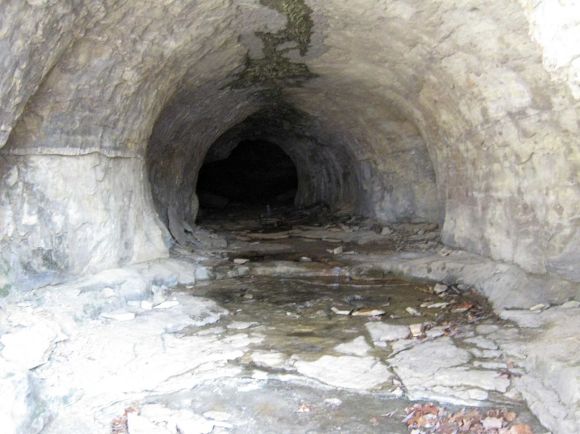
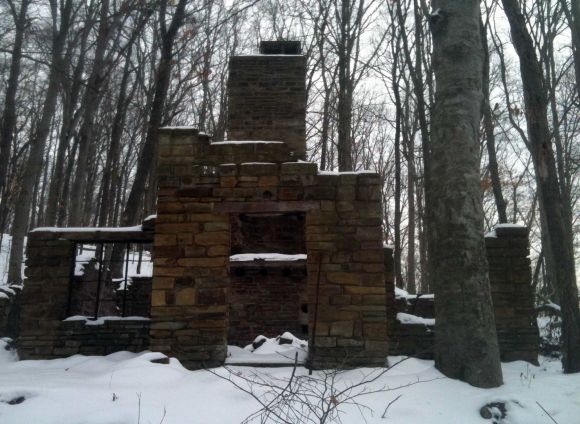
    This was a long and cold winter, and I got in only a few good rides this year. My biggest was a 6 hour tour of Lake Monroe that included Moore’s Creek Bay, the causeway, Back Creek and Potter’s Cave, and finally to Axom Branch, where the stone cabin ruins are to be found. On the way back, just rounding the corner opposite Rush Ridge, I went through the ice where a spring had thinned the 6 inches of ice.

    Fortunately, I was riding my long wheel base recumbent, and only the front wheel went in. I was up to my armpits in the water, but it was easy to roll off onto the ice. I watched a second and realized it was wedged in, but would soon enough sink, so I grabbed the handle bars and pulled back and up but it was stuck.

    I realized I should not put extra weight near the hole, but there was little I could do about that. I pushed a little to free it, then pulled back and the bike came out. I stood around for about ten minutes, drying my Iphone and waiting to see if I was going to go into shock or get really cold.

    But neither of these things happened. So I got back on the bike, and moved closer to shore where I knew the water was not deep, and made my way back about a mile to Pine Grove. Climbing the hill back to 446 warmed me up, and I only noticed the cold in my feet as I rode the 9 miles back home.

  • Dec. 2010

    This was a long and cold winter, and I got in only a few good rides this year. My biggest was a 6 hour tour of Lake Monroe that included Moore’s Creek Bay, the causeway, Back Creek and Potter’s Cave, and finally to Axom Branch, where the stone cabin ruins are to be found. On the way back, just rounding the corner opposite Rush Ridge, I went through the ice where a spring had thinned the 6 inches of ice.

    Fortunately, I was riding my long wheel base recumbent, and only the front wheel went in. I was up to my armpits in the water, but it was easy to roll off onto the ice. I watched a second and realized it was wedged in, but would soon enough sink, so I grabbed the handle bars and pulled back and up but it was stuck.

    I realized I should not put extra weight near the hole, but there was little I could do about that. I pushed a little to free it, then pulled back and the bike came out. I stood around for about ten minutes, drying my Iphone and waiting to see if I was going to go into shock or get really cold.

    But neither of these things happened. So I got back on the bike, and moved closer to shore where I knew the water was not deep, and made my way back about a mile to Pine Grove. Climbing the hill back to 446 warmed me up, and I only noticed the cold in my feet as I rode the 9 miles back home.

  • Family’s wrongful death lawsuit against city dismissed
    Driver agrees to settle suit over car accident that killed IU professor
    By Kurt Van der Dussen

    November 29, 1995
    A wrongful death lawsuit filed in November 1994 by the estate of Indiana University professor Max Zorn against the city of Bloomington and against the driver who struck Zorn two years ago has been dismissed.

    Michael Spencer, attorney for the Zorn estate, said Tuesday – the second anniversary of the accident – that the claim against driver Robert E. Jerrels was dismissed after he agreed to an undisclosed settlement of the case, while the claims of liability against the city were dismissed entirely.

    Zorn, an 86-year-old mathematics professor emeritus, was crossing East Third Street on his way home to dinner around twilight on Nov. 28, 1992, when he was struck and seriously injured by a car driven by Jerrels, whose current residence is unknown.

    Zorn underwent extended hospitalization for a broken arm and leg and a chipped pelvis. He died on March 9, 1993, of congestive heart failure in connection with his injuries.

    The accident dramatized the dangers both of walking and driving along East Third Street, which combines heavy traffic and thousands of pedestrian crossings to and from the IU campus.

    Zorn’s accident led to a public outcry to provide greater protection for pedestrians, which led to a vote by the Bloomington City Council a month after Zorn’s death to install traffic signals on East Third at Hawthorne Drive and Woodlawn Avenue.

    In November 1994, Zorn’s estate by attorney Spencer and Elizabeth Zorn filed suit against Jerrels for negligence in hitting Zorn and against the city for not having had the traffic lights in place before the accident.

    The lawsuit alleged that Jerrels negligently exceeded the 25-mile-per-hour speed limit along East Third, failed to control his car and failed to avoid a pedestrian in a clearly marked crosswalk.

    As for the city, the lawsuit alleged the city had “concrete knowledge” prior to the accident that East Third was frequently crossed by pedestrians and that drivers regularly exceeded the speed limit, thereby causing “severe danger” to pedestrians.

    The city denied any liability.

    The lawsuit sought compensatory damages from the city and from Jerrels for Zorn’s injuries, pain, major medical costs and death and for the emotional and financial losses those imposed for Zorn’s widow, Alice C. Zorn.

    Copyright: HeraldTimesOnline.com 1995